
The story
Una (formerly Happy Compass) evolved into a web app designed to help women build sustainable, healthy habits. The platform syncs sleep, stress, and activity data from users’ wearables, which is then analysed by our team of wellbeing experts to create personalised weekly plans for each customer.
We launched the initial version as a web app with 13 paying customers, known as our Pioneer Programme, a small, early-stage test group to validate the product concept and gather insights.
I lead the UX Research for the upcoming Community feature, which will be developed in a later phase. While the app is still under development, we decided to prototype the Community concept using WhatsApp.
We created three groups of four to five women each, encouraging accountability, motivation, and peer support to help them form sustainable habits and achieve better results.
Let me tell you how it went...





Competitive Analysis: Forums and Communities
Before becoming a habit-building app for women, Una was originally a general wellbeing app. As the Lead UX Researcher, I initiated a study focused on understanding how communities and forums function within wellbeing-related apps.
My goal was to identify what makes a digital community supportive, engaging, and safe.
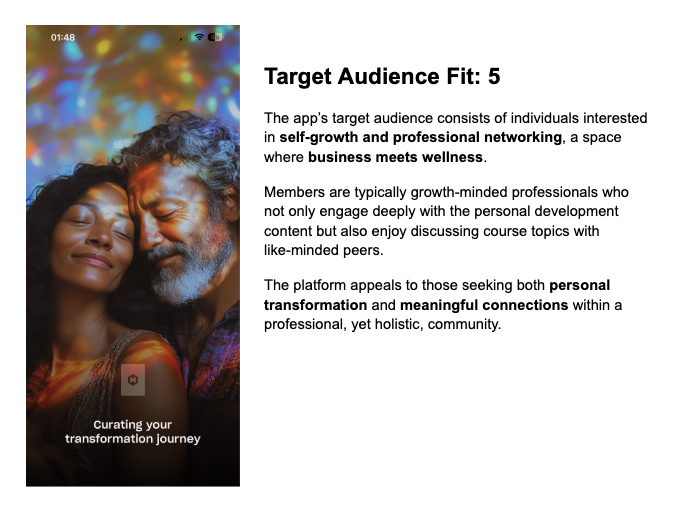
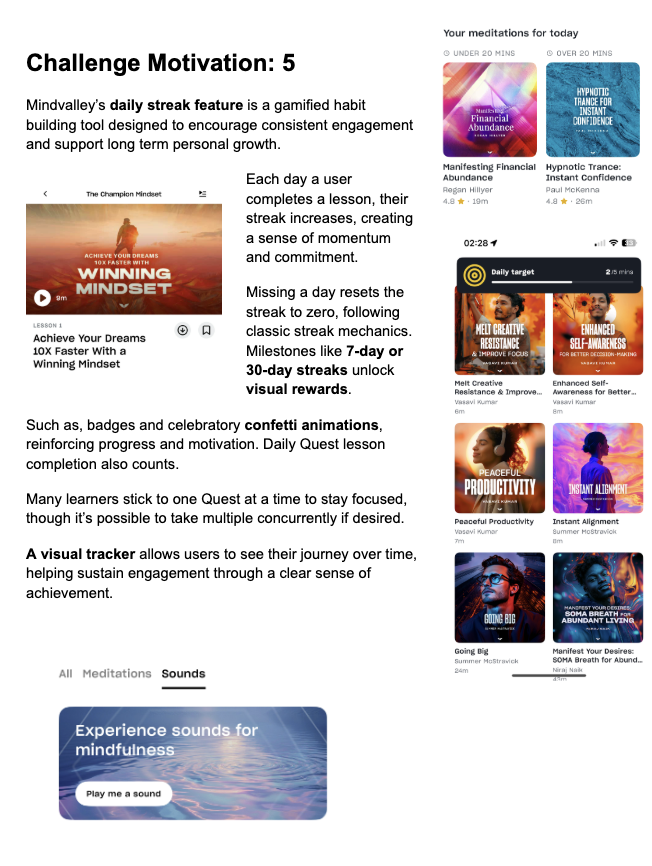
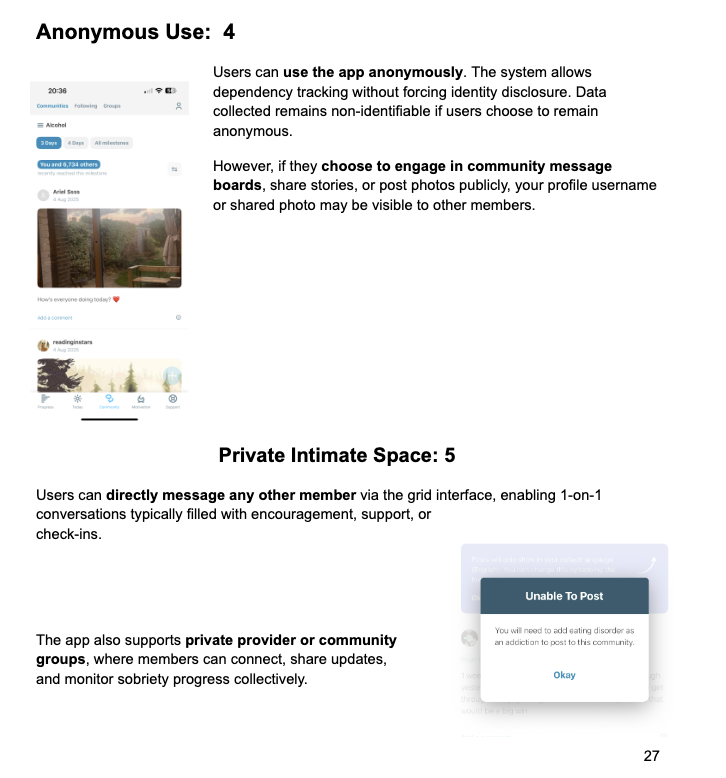
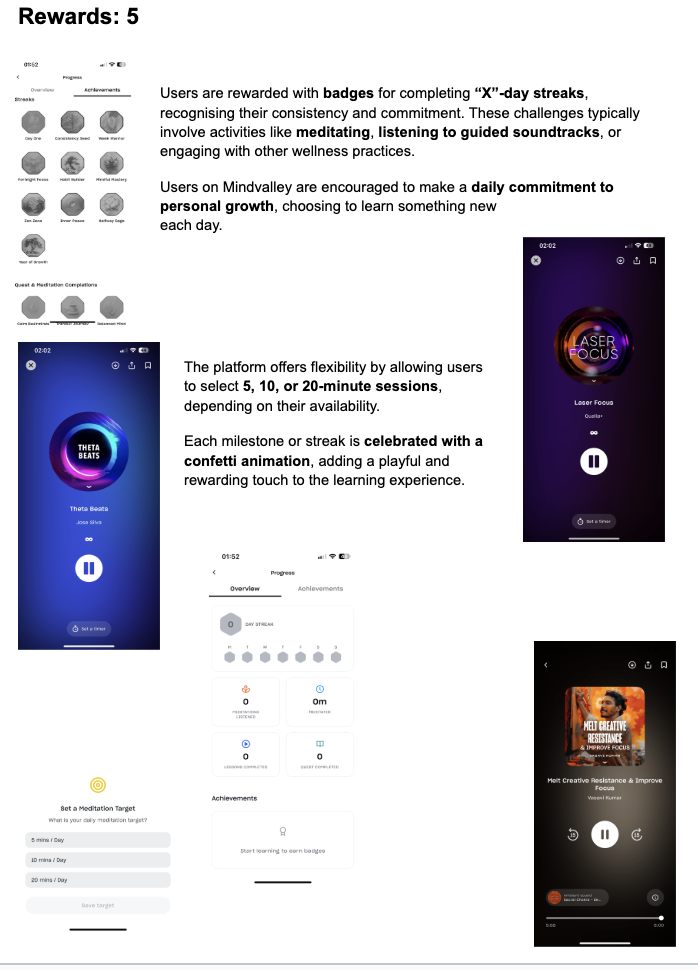
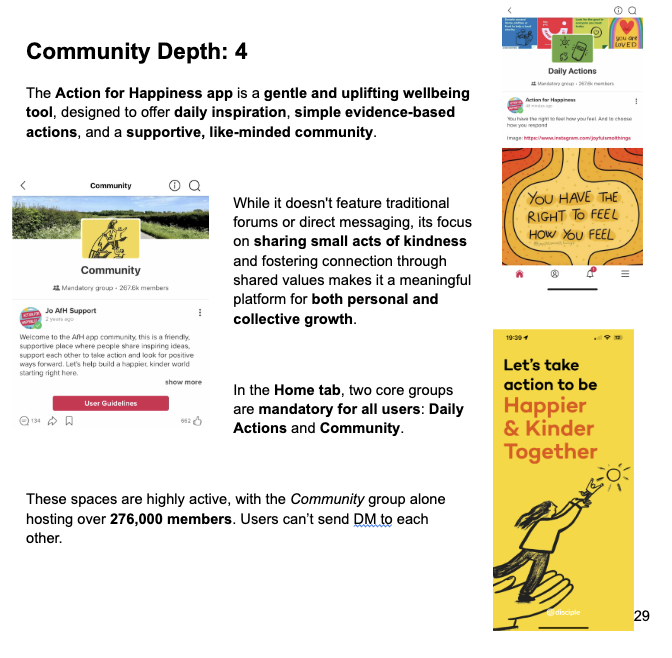
I analysed key aspects such as:
• Community Depth
• Rewards and Motivation
• Moderation and Safety
• User Interface (UI)
• Anonymous Participation
• Privacy and Intimacy
• Social Interaction Formats
• Target audience fit
These insights helped shape the foundation for Una’s upcoming Community feature, ensuring it is designed around genuine connection, trust, and long-term
Survey Analysis
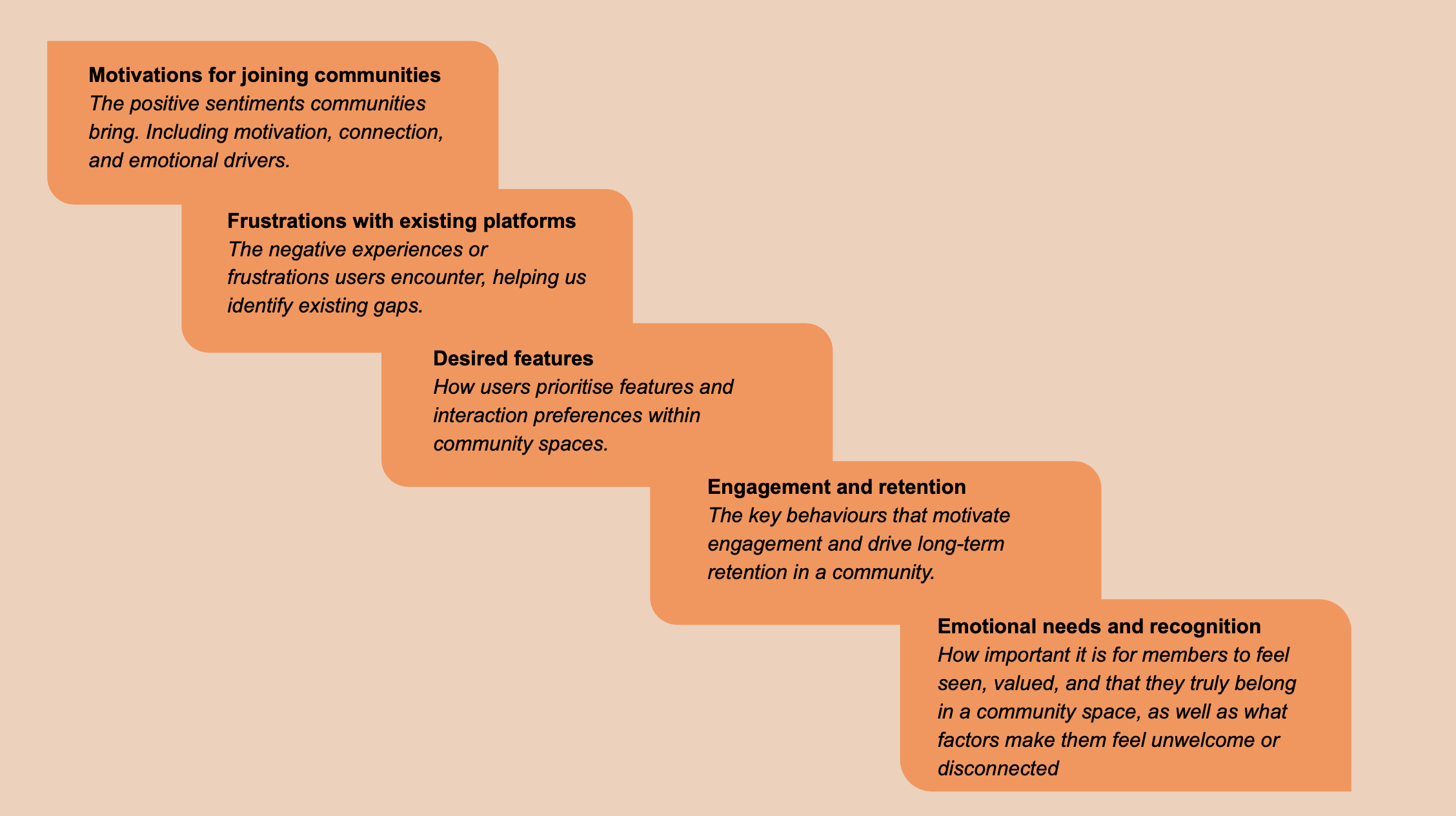
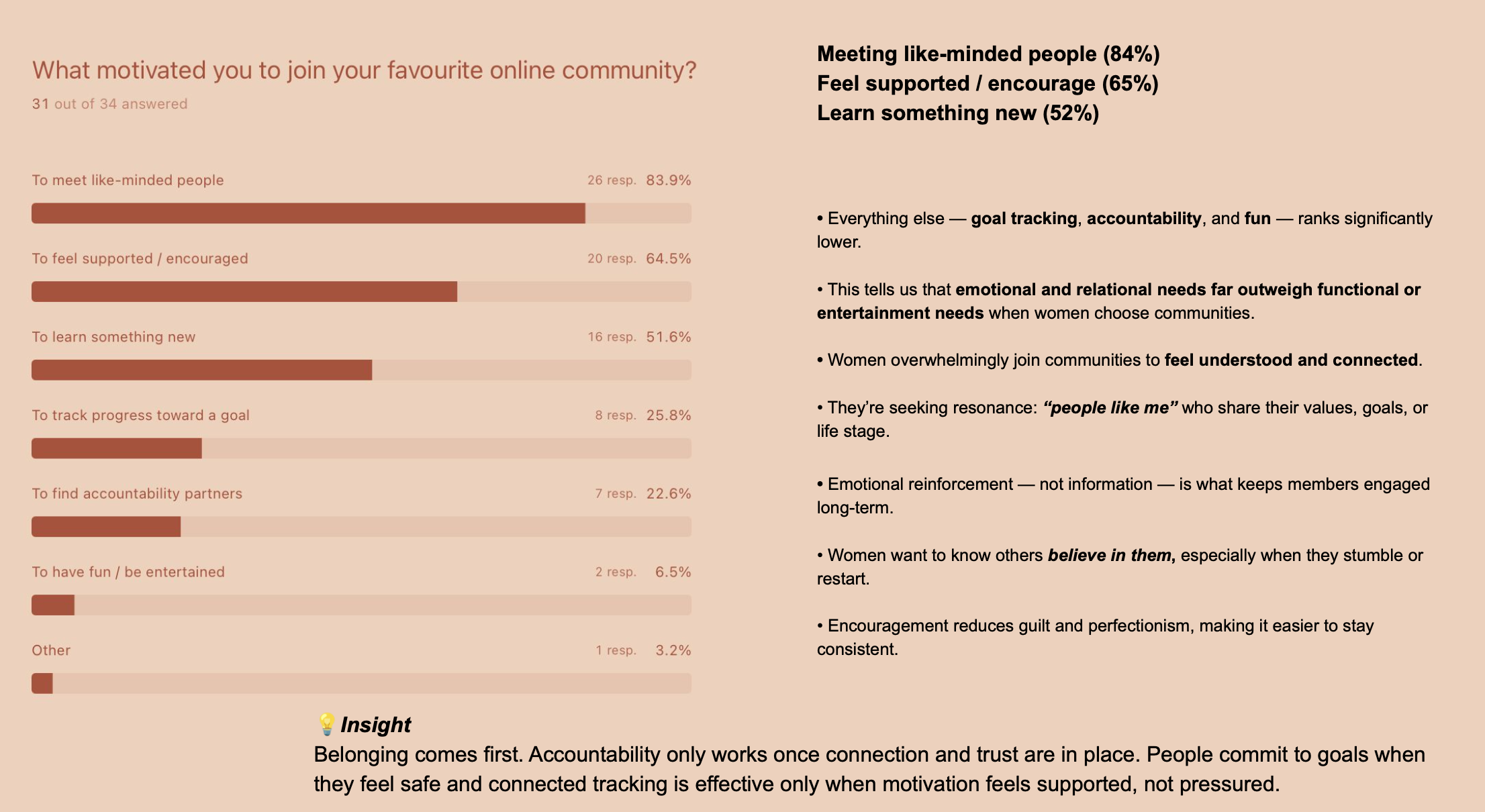
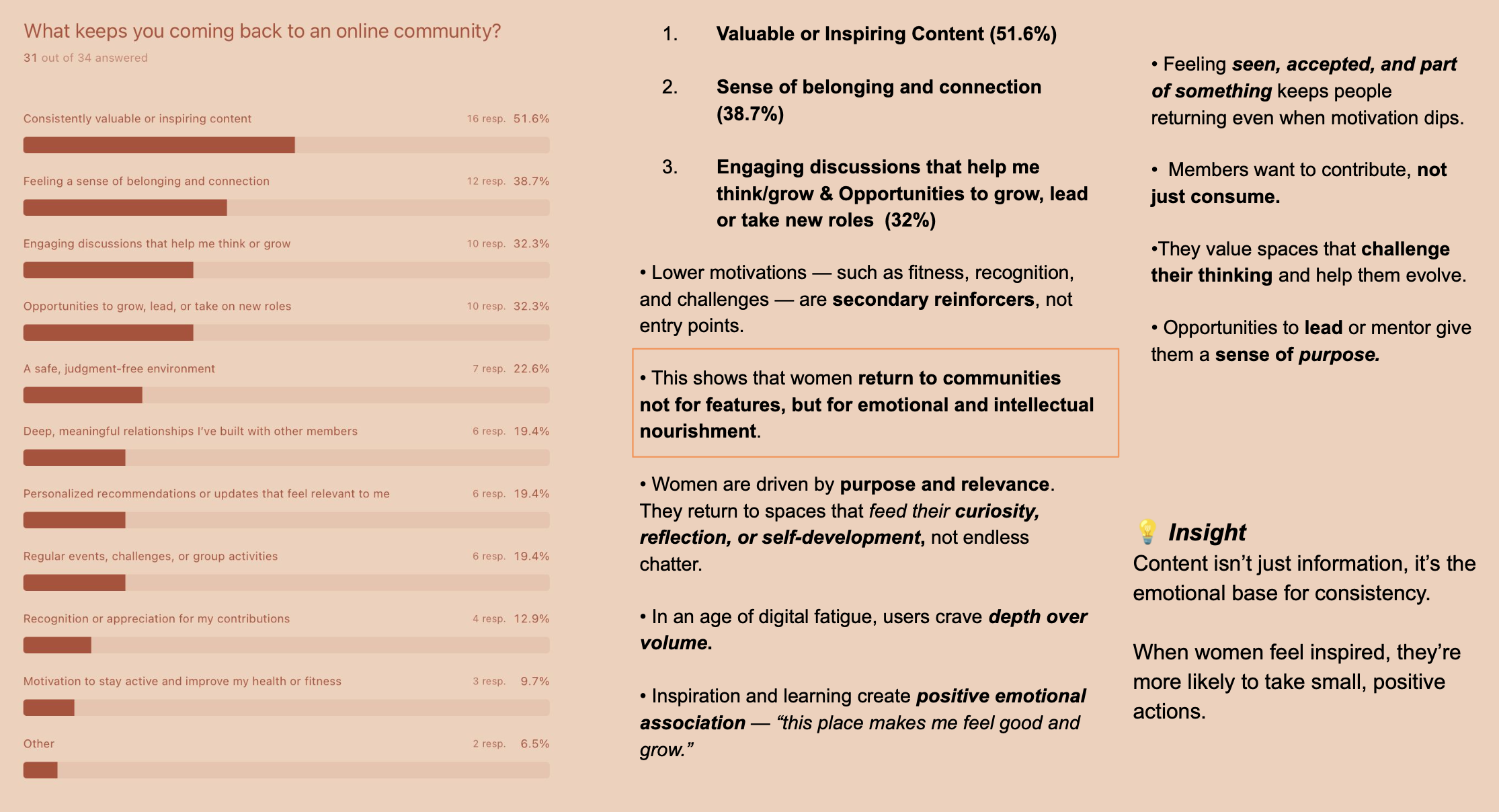
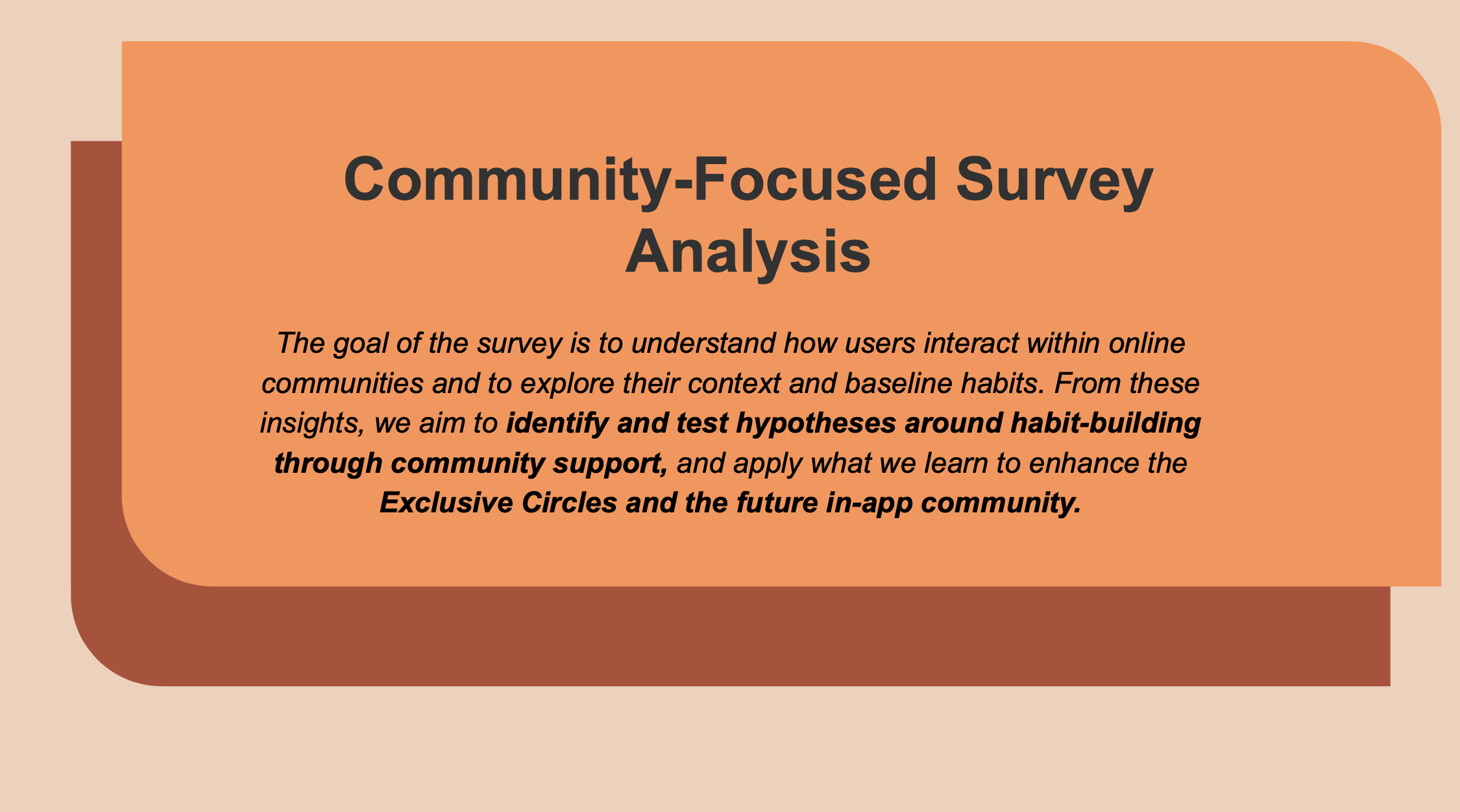
From the survey insights, I identified several assumptions that required validation.
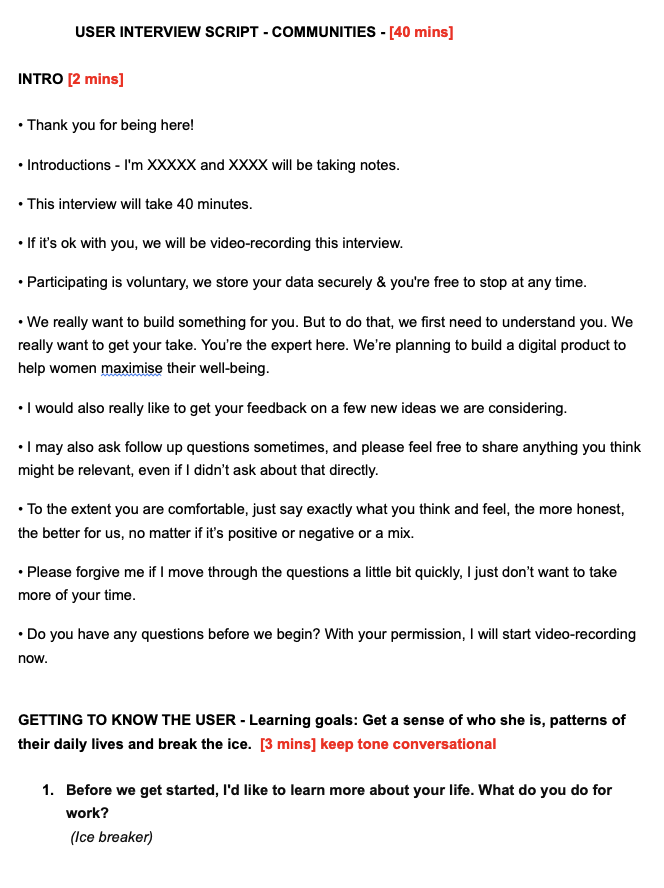
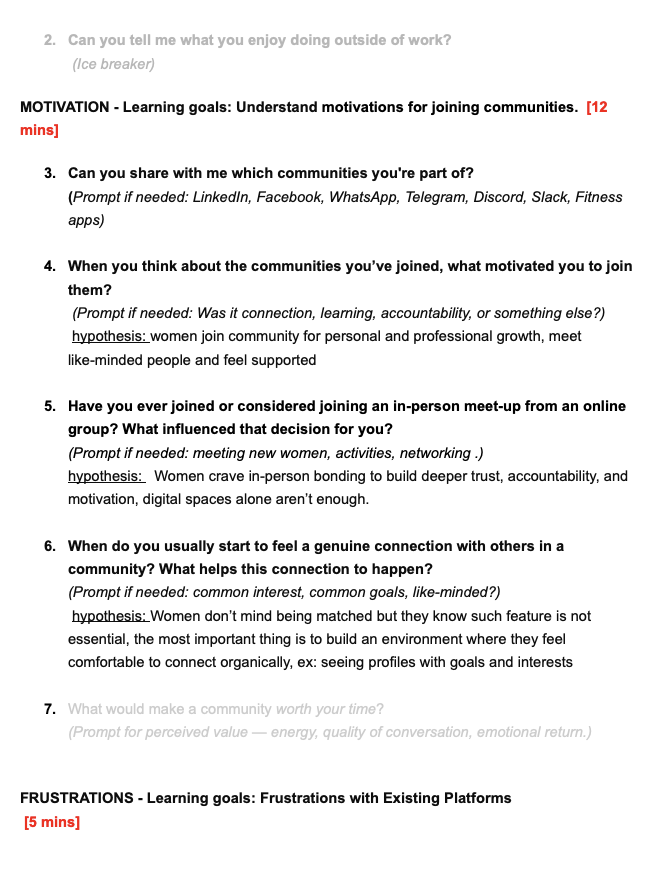
To deepen my understanding and test these assumptions, I conducted a series of user interviews with women from different backgrounds to explore their motivations, behaviors, and expectations when participating in online communities.
After analysing data from various communities and wellbeing apps, I gained a broad understanding of the different features and engagement models used across platforms. However, I wanted to narrow the focus and explore how women specifically interact in online communities.
To do this, I created a survey to gather qualitative and quantitative insights about women’s experiences, motivations, and expectations when engaging in digital communities. The survey was distributed across multiple channels, mainly Slack groups and LinkedIn, to reach a diverse audience of women from different backgrounds and lifestyles. They were from the USA, UK, Europe, Canada, South America and India.
User Interview Script
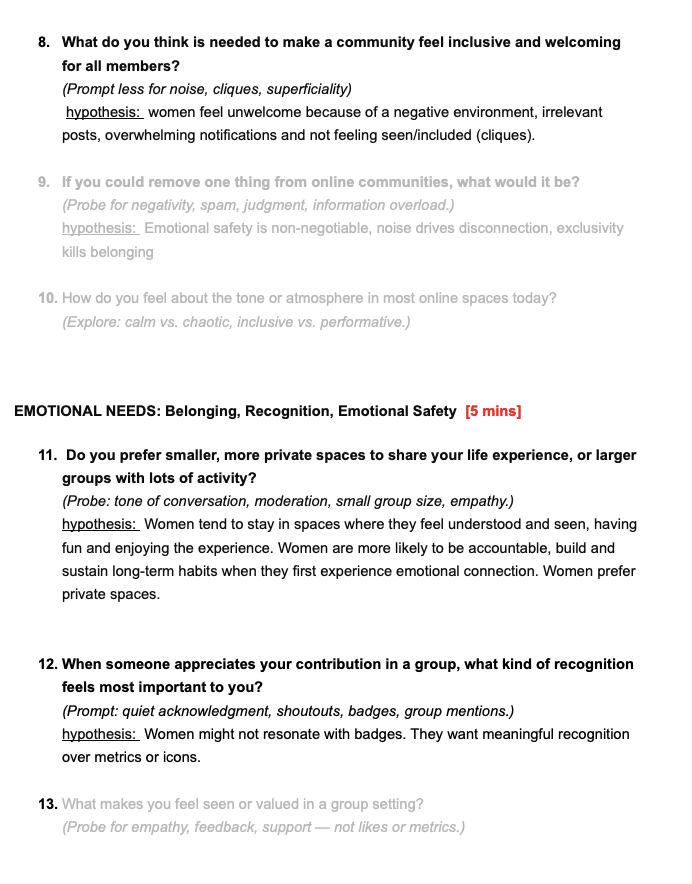
With a detailed interview script designed to help me validate my assumptions and explore participants’ motivations and behaviors in more depth. I conducted three user interviews with women based in the USA and the UK, each lasting approximately 40 to 45 minutes.
Exclusive Circles: micro-communities
I was also able to test my assumptions in a different way. While I was conducting research for the Community feature, our web app was live with 13 paying customers as part of the Pioneer Programme, and we had already created small community groups for them.
From my earlier research, I discovered that women are more likely to hold each other accountable within a community when they share an organic connection.
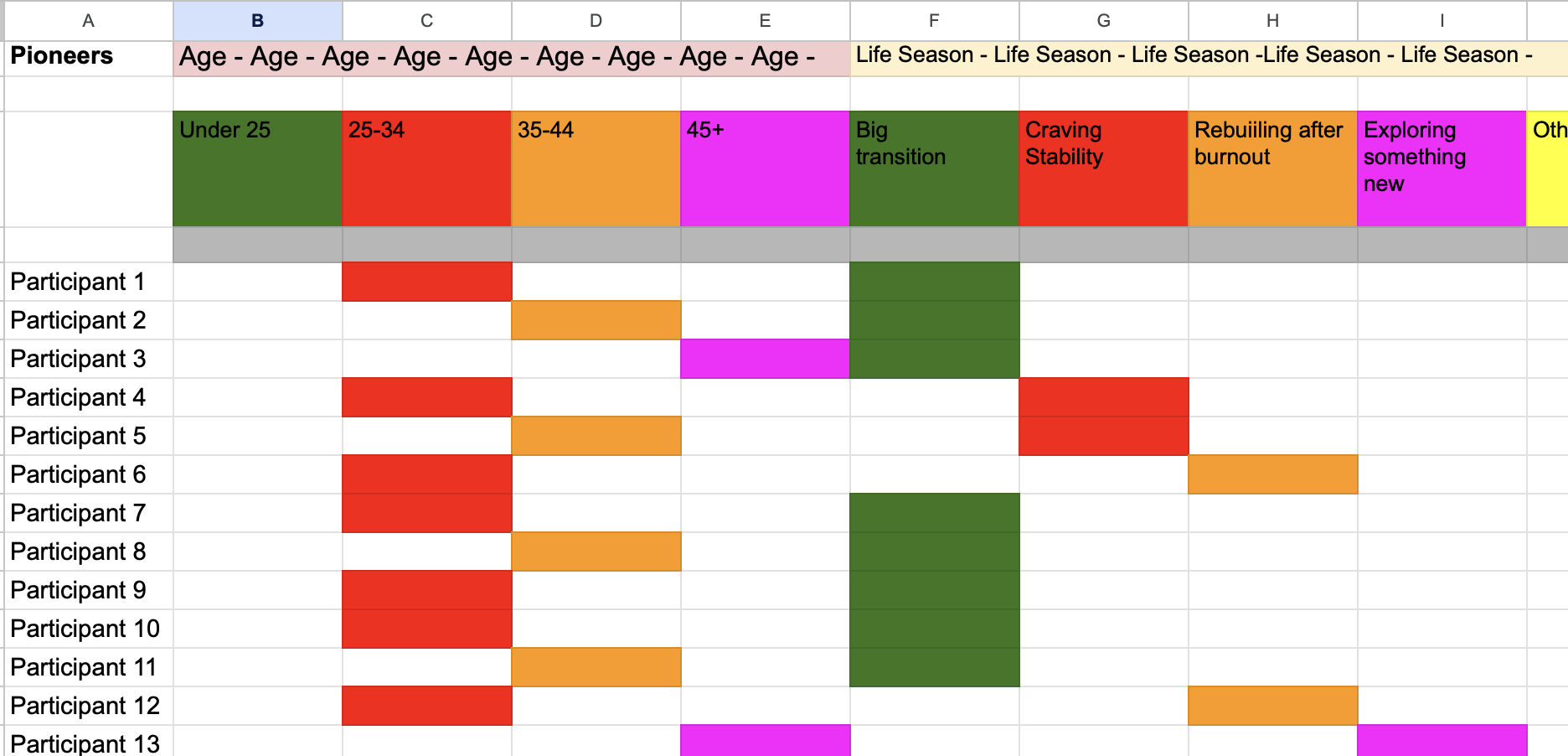
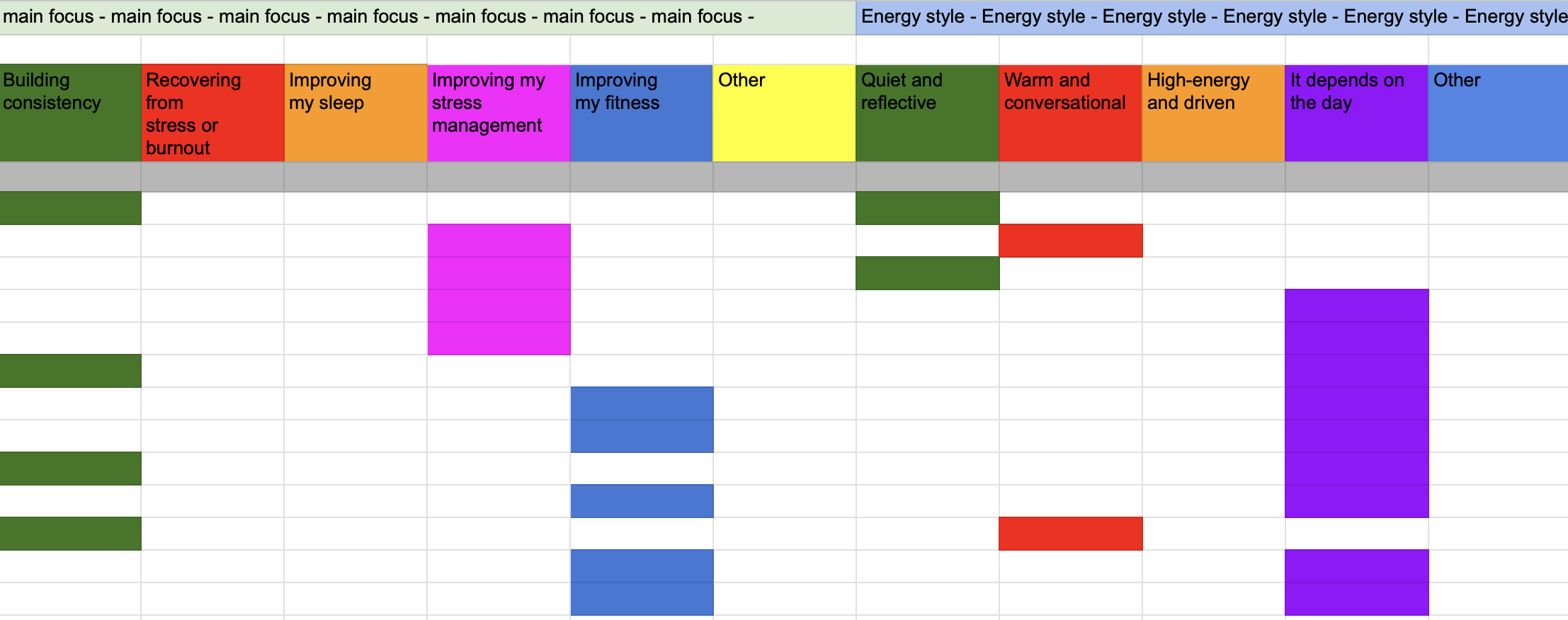
To explore this further, I designed a matching system to pair participants with similar profiles.
I sent out a short survey asking questions about their age, life stage, goals within the Pioneer Programme, personality type, and comfort level in online groups. After collecting the responses, I manually matched participants based on shared traits and goals to foster a sense of trust and belonging within each group.